
Wondering whether to use car wax or polish? While they may seem similar, these products serve distinct purposes. Car polish restores your paint by removing scratches, oxidation, and swirl marks, whereas car wax adds a protective layer that shields your paint from UV rays, dirt, and water spots. Using both in the right order ensures your car stays glossy and protected.
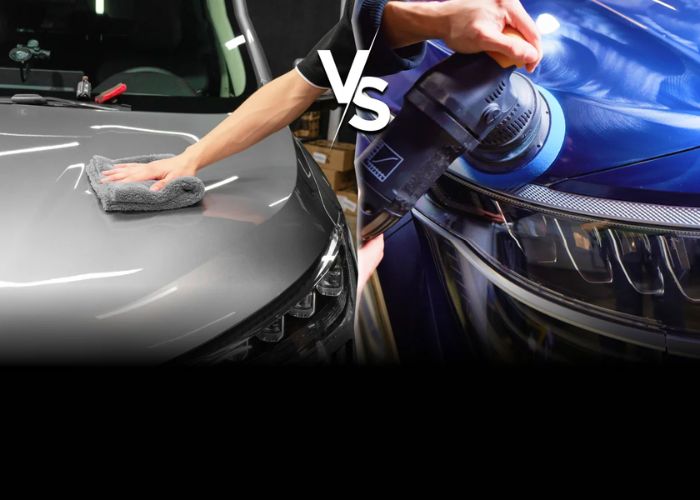
What Is Car Polish and How Does It Work?
Car polish contains mild abrasives designed to remove a very thin layer of the clear coat, correcting minor imperfections in the paint. This process smooths the surface, restores colour depth, and enhances gloss. Polishing is ideal for cars with visible scratches, dull spots, or oxidation that washing alone cannot fix.
To use polish effectively, always start with a clean, dry car. Apply the product in small sections with a soft cloth or machine buffer, then buff to reveal a smooth, corrected surface. Over-polishing can reduce the clear coat thickness, so it’s recommended to do this sparingly, usually once or twice a year depending on your driving and parking habits.
What Is Car Wax and How Does It Work?
Car wax, unlike polish, is not abrasive. It forms a protective barrier on top of the paint, shielding it from environmental damage, UV rays, and water spots. Wax also gives the car a glossy, water-repellent finish, making routine cleaning easier.
Waxes come in natural (carnauba-based) or synthetic forms, and can be paste, liquid, or spray. After washing and polishing, apply wax in thin, even layers. Let it haze, then buff with a clean microfiber cloth for optimal shine. Unlike polish, wax can be applied more frequently, often every 2–3 months, without affecting the paint’s integrity.
Wax vs Polish: Key Differences
The major distinction is that polish corrects while wax protects. Polish removes imperfections, restores colour, and prepares the paint for waxing. Wax creates a protective coating, enhances gloss, and repels contaminants.
| Feature | Car Polish | Car Wax |
| Purpose | Corrects paint | Protects paint |
| Abrasives | Yes | No |
| Use Frequency | Sparingly | Every 2–3 months |
| Shine | Restores clarity | Adds gloss |
| When to Use | Before waxing | After polishing or washing |
| Main Benefit | Removes scratches and dullness | Protects from UV, water, and dirt |
Using both in sequence ensures maximum longevity: first polish to correct the paint, then wax to seal and protect the surface.
How Often Should You Wax and Polish?
The frequency of waxing and polishing depends on factors like climate, parking habits, and vehicle use. Cars parked outdoors under sunlight may require more frequent waxing to maintain protection against UV damage.
Polishing should be limited to 1–2 times a year to avoid thinning the clear coat, while waxing can be done every 2–3 months for ongoing protection. Using a combination approach ensures your car stays in pristine condition without over-processing the paint.
Choosing the Right Products for Your Vehicle
Not all waxes and polishes are created equal. Natural carnauba wax gives a warmer, glossy finish, but synthetic waxes often last longer and offer better environmental protection. Polishes vary in abrasiveness—light polishes are suitable for minor scratches, while heavy-cut compounds target deeper imperfections.
Choosing the right product depends on your vehicle’s paint condition, age, and desired finish. Always read product instructions carefully to avoid over-polishing or uneven waxing.
Tips for Applying Polish and Wax
- Always wash and dry your car thoroughly before starting.
- Use small sections for both polish and wax to ensure even application.
- Buff polish or wax with a clean microfiber cloth for the best shine.
- Avoid polishing too often; waxing can be more frequent.
- Store products correctly to maintain their effectiveness.
Conclusion
Understanding the difference between car wax and polish is key to keeping your vehicle in top condition. Polish corrects imperfections and restores your paint, while wax protects and enhances shine. Using both in the right order ensures long-lasting gloss, protection, and a smooth, vibrant finish. With the right approach, your car will look newer for longer and stay shielded from environmental damage.
FAQs
Q: Can I apply car wax without polishing first?
A: Yes, if your car’s paint is in good condition. Wax will protect and add shine, but it won’t correct existing scratches or oxidation.
Q: How often should I polish my car?
A: Generally, 1–2 times a year depending on paint condition, driving habits, and exposure to the elements. Overuse can thin the clear coat.
Q: Is synthetic wax better than natural wax?
A: Synthetic wax usually lasts longer and provides stronger protection, while natural carnauba wax gives a warmer, glossy finish. Choice depends on preference and your desired finish.
Q: Can I do both polish and wax at home?
A: Yes, but follow proper procedures. Ensure your car is clean, apply polish carefully, and use wax in thin, even layers for the best results.
Q: What’s the difference between a quick-detailing spray and regular polish?
A: Quick-detailers give a temporary shine and minor surface cleaning. Regular polish actively removes imperfections and restores the paint’s clarity.